Lacto Fermented Hot Sauce: To Cook Or Not To Cook
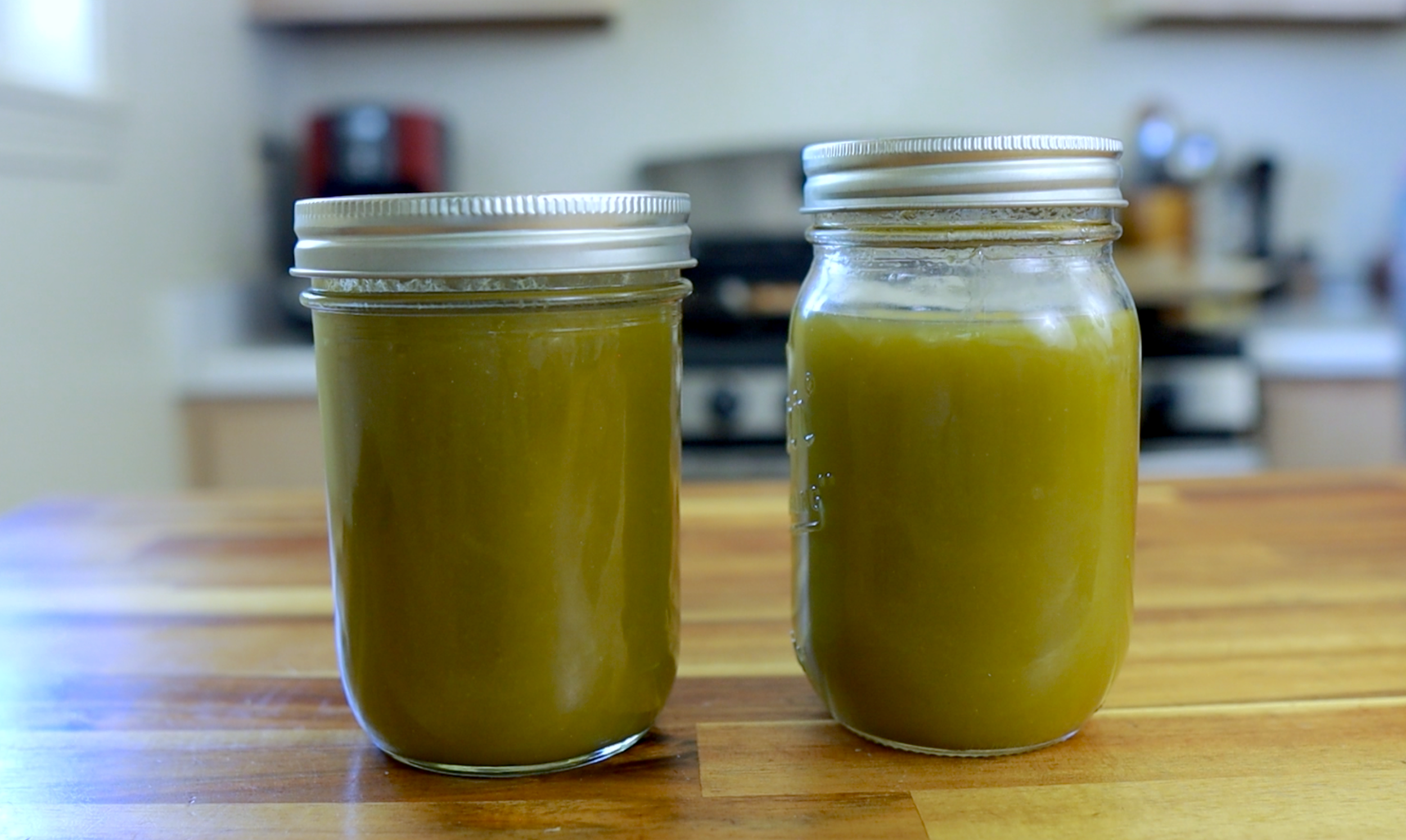
“Cooked” hot sauce on the left, “Raw” sauce is on the right.
There are a few highly debated topics within the subject of homemade lacto fermented hot sauce. One of the biggest from what I see is whether or not cooking the ingredients after the fermentation period ruins the flavor, kills the beneficial bacteria, and is a waste of time in general. On the other side of that is where I stand. Fermented hot sauces that are allowed to stay live can alter in flavor over time from the slow fermentation alone. There will be a time where all available food for the bacteria will all be consumed and will die off anyway. I typically ferment for the flavor of the sauce since the fermentation process gives the ingredients a very unique and delicious flavor that can’t be replicated. As a chef with many years of experience making sauces, I love the flavor that cooking a sauce down gives. It only enhances the flavor when sauces get reduced. Think about making a red wine pan sauce. Would it have more robust flavor if the wine is simmered only for a minute or two with almost the original volume and thickened with a roux? Would the sauce taste good if it gets thickened by a slurry or would it have more flavor cooking down and reducing it to a desired thickness? Hot sauces are no different. When I make fermented hot sauces, I use the brine as component for blending the sauce with a controlled consistency. Before blending, the ingredients for the sauce gets placed in a pot and simmered for 20 minutes or until the ingredients are softened. The cool thing about cooking is that you can customize a recipe tailored to your liking. Hot sauce making is the same. If you have experience making homemade fermented hot sauce, you probably have an opinion of your own on fermentation time frame, straining the sauce or not, cooking the sauce or not, adding vinegar or not, and using commercial thickeners or not. Cooking the ingredients before blending will enhance the flavor of the final sauce since some of the water content is simmered off.
The purpose of this post is to compare two fermented hot sauces. Both are equal in ingredients, fermentation duration and brine salinity. The difference lies in cooking the ingredients for one sauce before blending and leaving the other one “raw”. From there, I like to age the sauces for another 3-4 months in the bottle before use. What I want to see is any significant differences in flavor. Is one better than the other? Let’s find out. But first, I will go over the fermentation process itself step by step.
For the listed ingredients, the amount of of peppers is for each batch. I ended up using 30 peppers and 1 whole onion and 4 cloves garlic total. I used a 2.5 % brine. I use the Noma guide to fermentation method which will be described below.
Ingredients:
15 serrano peppers
½ white onion
2 cloves garlic
The following is done by weight, method shown below:
Filtered water
Fine sea salt
Tools needed:
Kitchen scale
Sharp knife
Mixing bowl
Blender
Mesh strainer
Small ladle
Cutting board
Rubber gloves
Quart sized mason jar x 2
Fermentation weight
Whisk
Air lock lid (sometimes I use a coffee filter and rubber band)
How to make it:
Wash and dry peppers. Cut off the stem ends and slice peppers in half. Inspect the inside to make sure it isn’t moldy or going bad. Cut onion in half. Remove the outer paper layer and rough chop. Cut off root end from garlic and remove the paper layer.
Place empty mason jar on the scale and tare. Add the ingredients and fill the jar with water just below the neckline. Record that weight and multiply it by 2.5 %. This is the amount of salt you need to make the brine. For example., if the ingredients plus water is 950 g, then you will need 23.75 g salt. (950 × .0025 =2.375) I typically round to the nearest whole number. Carefully pour the water from the jar into a mixing bowl. Place a small dish on the scale and tare the scale. Add the salt until the amount is needed. Add the salt to the bowl with the water and stir to dissolve completely. Pour the newly made brine back into the jar with the ingredients and place the fermentation weight on top. It is very important that the ingredients stay submerged under the brine level. Place the lid on the jar and keep in a dry place away form direct sunlight. The fermentation works great at temperatures around 68-75 degrees F. I have a spot in my pantry that stays consistent temperature years round, day or night. Ferment for 1 month. You will see signs of fermentation after day 4 or 5. This will look like tiny bubbles forming on the outsides of the peppers.
After the fermentation period, check the pH of the brine. It should be under 4.6 to be considered safe to keep moving forward and making sauce. If all went well, you should see a pH around 3.5 to 3.7.
Now, for the sauce that has been cooked, place all contents in the jar in a small stock pot. Put over high heat and bring to a boil. Reduce heat and keep on a low simmer for 20 minutes with a lid on the pot. If you make a lot of hot sauces, you know what I mean when the fumes get out there in your house causing irritation to you and others around. When the ingredients are softened, place the solids in a blender with just enough of the brine to cover the ingredients by half. Blend on high for 30 seconds until smooth adding more brine to reach desired consistency. Strain the sauce through a mesh strainer into a bowl and let cool to room temperature. For this experiment, I am going to wash out the blender completely.
For the other sauce, place the solids in a blender. Add enough brine to cover the ingredients buy half and blend on high. Add more brine while blending until desired consistency is reached. Again, strain through a mesh strainer into a bowl. I store my sauces in mason jars or hot sauce bottles when I have some available.
Taste test and results:
I was pretty impressed with how different these sauces tasted from one another. The non cooked sauce had a more grassy tone to it. It of course, tasted like raw peppers. It had a slight amount of sourness to it from the fermentation process. The cooked sauce had more of a concentrated pepper flavor with no grassy tones to it. There were no hints of sourness to it, but the depth of flavor all together was a lot more pronounced. Both sauces were exceptional in flavor and one was not better than the other. In the end, it is all about personal preference and if you want to keep the live culture in the sauce.
If you do this experiment, I would love to hear your thoughts. If you’re new to making fermented hot sauce, I have a ton of videos on my YouTube channel to see. Here’s the link to my favorite fermented hot sauce recipe: Habanero hot sauce
Enjoy
Logan